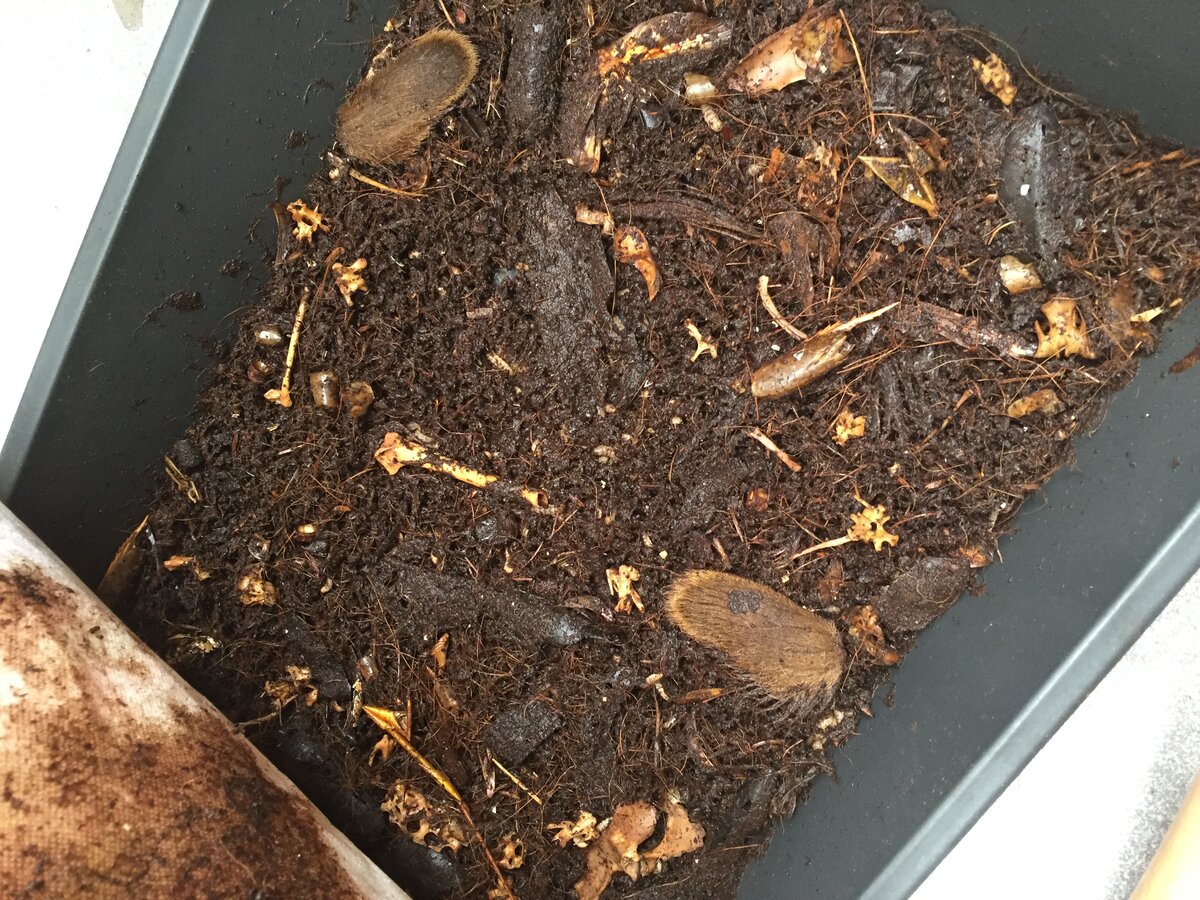
What frass is
Frass is the solid, dry-ish material that remains once larvae are harvested or screened out. It is mainly larval excrement, undigested feed particles, and shed exoskeletons (molted skins). Moisture content varies with feedstock and handling—often in a wide band around 30–70% when fresh.
Frass is not the liquid that drips from the bottom of a bin. That runoff is leachate. Some growers also make a derived frass tea by steeping solid frass in water; that tea is a separate product from both raw frass and leachate.
What it is good for
Composted or cured frass is applied as an organic soil amendment—supplying nutrients and organic matter similar in role to other organic fertilizers. Field studies report useful maize and vegetable responses at specific application rates; nutrient density depends on larval diet and post-processing, so compare like-for-like products rather than assuming one batch matches another.
- Soil amendment — improves structure and fertility when applied at appropriate rates.
- Feedstock-dependent nutrients — nitrogen and other elements reflect what the larvae ate.
- Regulatory context — curing, heat treatment, or registration may apply before sale or broad field use in your jurisdiction.
Handling basics
Separate solids from draining liquid early. Allow frass to cure or compost if your operating plan calls for it—fresh, wet frass behaves differently from stabilized material. Store dry-ish and covered; avoid anaerobic piles that reek or attract pests.
Not the same as
- Leachate — uncontrolled liquid runoff from the bin bottom.
- Frass tea — intentional extract made from solid frass.
- Raw larval biomass — harvested larvae (BSFL) for animal feed, not frass.
Research trail: Frass definition, Maize field rates, Vegetable trials (Benin).