Overview
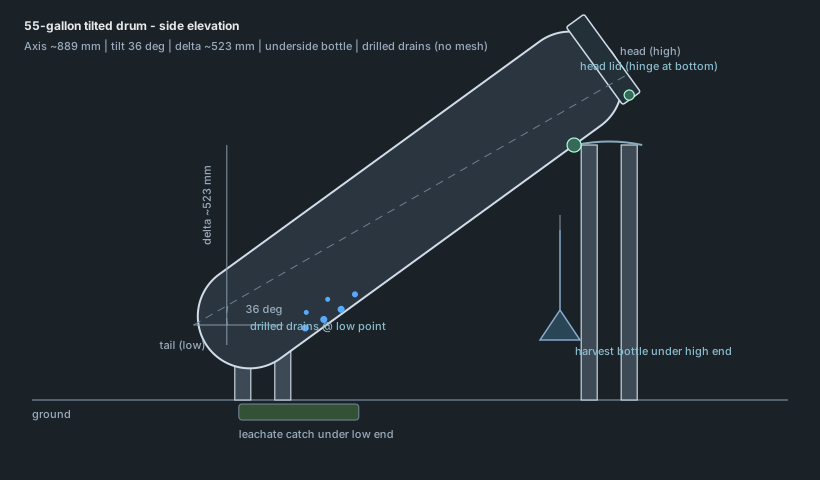
This is the compound-scale version of the tilted-drum layout: a 55-gallon (208 L) drum on its side, 36° from horizontal, on welded legs with asymmetric cradles (~523 mm / 20½ in height difference between head and tail). It fits a family compound (several kitchens sharing one unit—each kitchen ~0.5 kg/day sorted scraps mid) or a small food business with steady trim waste—for example a meat or bakery processor feeding scrap into one drum. A typical full-service restaurant (~15–20 kg/day food waste, claim) often outgrows a single drum into a modular stack; this is not a neighborhood collection hub. Prepupae crawl up the incline into a collection bottle hanging under the high end; leachate leaves through drilled holes at the low point (no mesh)—optionally with a 3/4 in ball valve for flushing.
Principles and external DIY references: tank design article. Smaller scale: 5-gallon tilted drum. Hub scale: modular stack unit (5-gallon columns with PVC drainage) or this drum as a 55-gallon row variant.
What you build
- Welded frame — angle iron or square tube; braced for 150–200 kg loaded drum; clearance under high end.
- Head access — stock open-head lid or plate in the flat head; hinge on the bottom edge (hangs open); no latch.
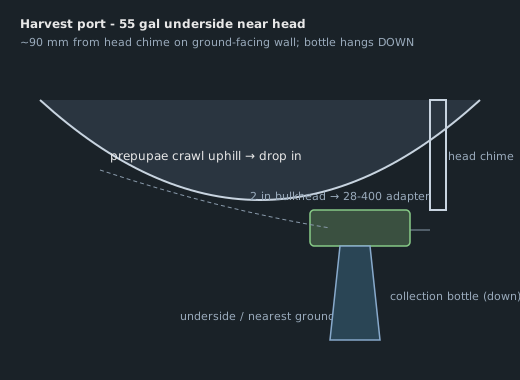
- Harvest port — underside bulkhead ~90 mm below head chime; bottle hangs down.
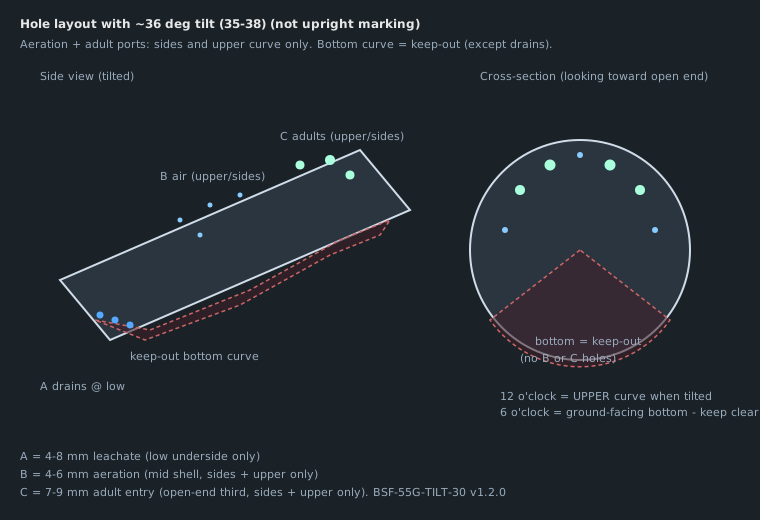
- Drainage / air / adults — low-point drain cluster (~4–8 mm); aeration on sides and upper curve (tilted); adult ports ~7–9 mm (under 1 cm) in the open-end third; optional valve at 6-o'clock; no mesh.
Schematics
Build from these drawings—not from marketing photos. Scroll the set; each figure is the measuring source.
Materials
Gather these before you cut. Optional items use unit optional or qty 0 for notes.
| Qty | Unit | Item | Spec | Notes |
|---|---|---|---|---|
| 1 | each | Vessel | 55 gal (208 L) poly OR steel drum; food/beverage prior use preferred | No chemical or unknown prior contents; open-head preferred for stock-lid hinge |
| 1 | each | Head lid/plate | Stock open-head lid OR hinged plate in flat tight-head (~300×350 mm min) | Hinge on bottom edge of face; no hatch in curved barrel |
| 2 | each | Heavy hinges | 100 mm strap hinges with bolts | Bottom of lid face so it hangs open by gravity |
| 1 | optional | String | Cord for pull-handle / rare wind tie-down | No hasp/latch required |
| 6 | m | Leg frame | 38×38×3 mm angle iron OR 50×50 mm square tube | Weld; clearance under high end for bottle + hanging lid |
| 2 | each | Cradle saddles | Bent 50 mm flat bar lined with rubber hose | Spread load on poly drums |
| 1 | each | Drain valve (optional) | 19 mm (3/4 in) NPT ball valve at lowest point | Plus drilled weep cluster as primary drain |
| 1 | lot | Drain cluster | Many ~4–8 mm at geometric low point | No interior mesh; deburr |
| 1 | lot | Aeration holes | Sparse ~4–6 mm on sides + upper curve when tilted (mid shell) | Keep off ground-facing bottom curve—nothing should drain/fall out |
| 1 | lot | Adult entry ports | ~7–9 mm (under 10 mm) in open-end / top third on sides + upper curve | Adults fly in to oviposit; never on bottom curve when at 36° |
| 1 | each | Leachate catch | 20 L bucket or drain sump under low end | Route to treatment—not crop tea without testing |
| 1 | each | Harvest fitting | 50 mm (2 in) NPT bulkhead → 28-400 adapter OR welded boss on UNDERSIDE near head | Bottle hangs DOWN under high end |
| 1 | each | Collection vessel | 2–3 L PET bottle OR 5 L jar with matching threads | Bottom removed; empty when full |
| 1 | optional | Vent | Small drilled holes in lid/head or retained bung | Screen only if rodents force it |
| 1 | each | Gasket sheet (if cut plate) | EPDM or closed-cell strip for feed plate | Compress evenly |
| 16 | each | Fasteners | M8×40 mm bolts + nylock + washers | Frame; use stainless near wet zones |
| 1 | can | Exterior paint | Rust primer + topcoat if steel drum outdoors | Not on interior feed surfaces |
| 1 | set | Tools | Angle grinder; drill; hole saw; welder; inclinometer; deburr | File all shell edges |
Optional spreadsheet download: materials.csv
Build guide
Full steps: build guide (HTML; print from the browser for paper).
Build sequence (summary)
- Source food-grade poly or clean steel drum; wash thoroughly.
- Weld asymmetric cradle frame; verify 36° ± 2° (band 35–38°) before mounting drum.
- Drill low-point drains, side/upper aeration (off bottom curve when tilted), and adult ports in the open-end third (no mesh); optional ball valve.
- Hinge head lid/plate on its bottom edge; optional string—no hasp.
- Install underside harvest bottle near the head; water leak-test.
- Shade under roof; batch feed; empty collection bottle as prepupae accumulate.
Poly or steel
Poly tight-head drums use NPT bulkheads and wide saddles—never point-load the shell. Steel drums allow welded bosses but require deburring and exterior rust prevention. Both need shade; large drums overheat quickly in sun. The tank materials article compares durability, sourcing, and compound-scale field notes from Chiriquí.
License: CERN-OHL-P-2.0 · Design ID BSF-55G-TILT-30