Overview
Hub operators handle full buckets daily—café grounds, market trim, compound collections. A loaded 5-gallon bucket (~15–25 kg) is a one-person lift; a loaded 55-gallon drum is not. This design stacks rack-adapted 5-gallon modules in a welded frame—same standard bucket SKU as pickup routes, but a different physical prep.
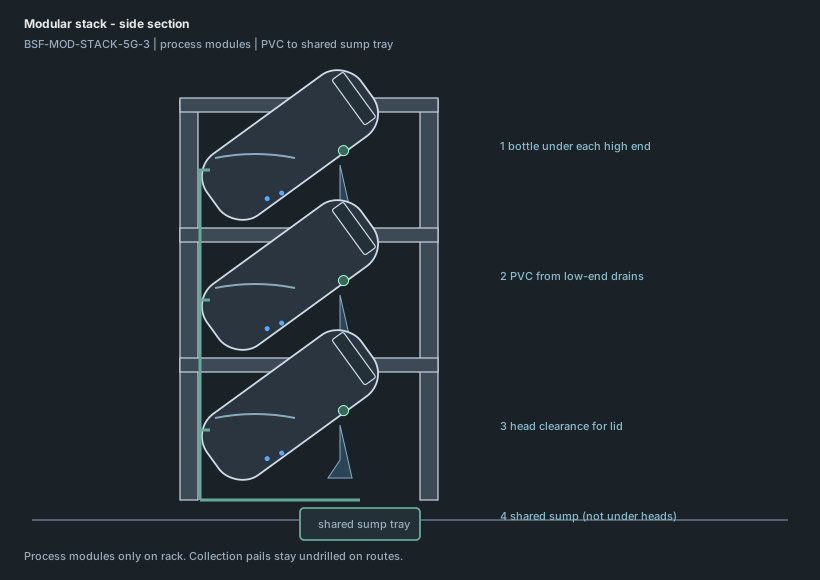
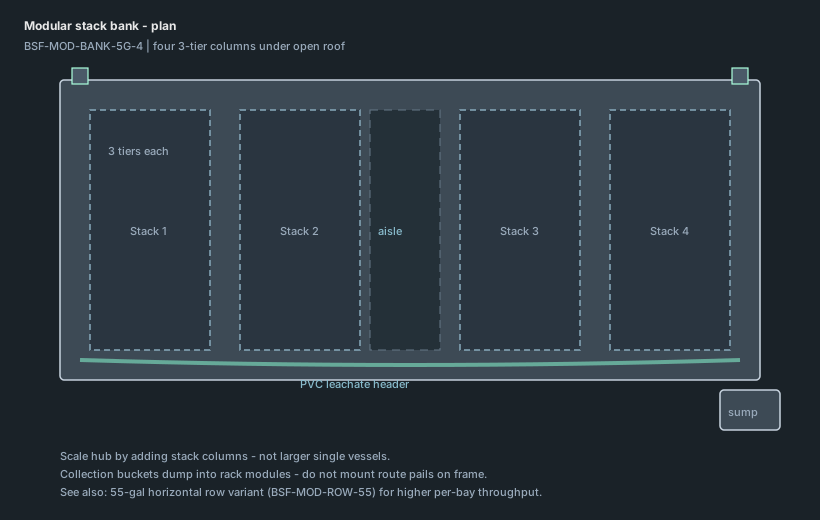
Each tier keeps the same 36° tilt and harvest geometry as the rack bucket (+ lid kit). A welded frame holds two or three tiers per column; PVC tees and a sloped header collect leachate into one sump. Scale by adding columns under an open-sided roof.
Logistics: see waste stream (tier-A routes, operator rhythm). A 55-gallon horizontal row remains a high-throughput variant when feed is dumped centrally.
Collection buckets vs rack modules
5-gallon buckets are standard, cheap, and widely available—the same material everywhere from restaurants to hardware stores. They are multi-use. But you cannot use one physical bucket for both jobs: the restaurant’s collection pail stays intact; the rack module is permanently modified.
| Role | Physical prep | Where it lives |
|---|---|---|
| Collection bucket | Food-grade pail, tight lid, no drill holes | Café prep line, pickup route, swap with clean empties |
| Rack module | Drains, harvest port, access lid per 5-gallon build | Cradle on stack frame; drain jumper to PVC header |
At the hub the operator dumps collection buckets into rack modules (through the adapted feed lid)—or tops up through the head opening—not by placing the restaurant’s bucket on the frame. When a rack module cracks or fouls, swap it for another prepped spare; collection buckets on the route stay separate.
Replacement is cheap either way: buy a new standard bucket, clean it, drill the pattern, fit the lid kit—work a local manufacturer or the hub workshop can do in batch. Damaged collection buckets likewise swap for new stock without custom parts.
What you build
- Steel stack frame — posts, tier shelves, flat-bar ring cradles with EPDM edge trim, head stops; bolt to slab.
- Rack modules — adapted buckets (drilled, access lid, harvest port) per 5-gallon guide; not collection pails.
- PVC drain system — tier jumpers → column downcomer → bank header → sump.
- Operator aisle — access for bottle swap, feeding, and bucket lift (top tier may need a step).
- Open-sided roof — rain off the feed; native flies; no climate control (why not a tray hall: buckets vs climate trays).
Capacity planning
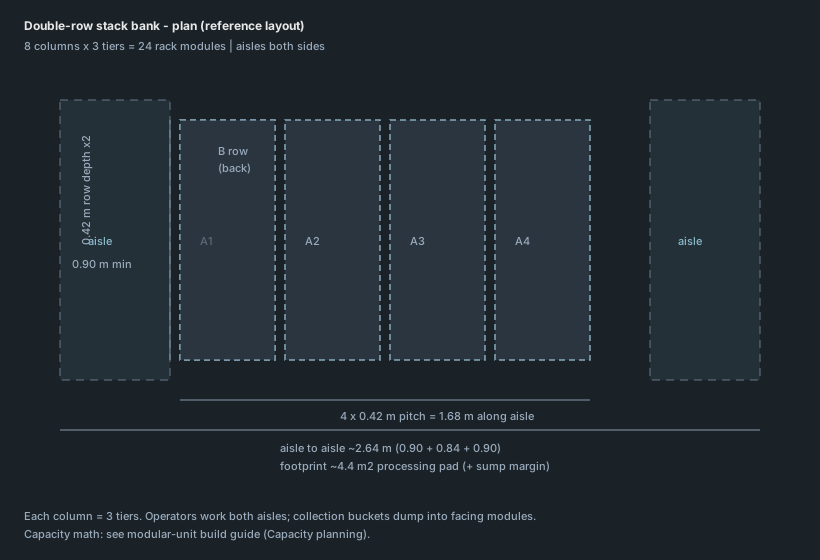
Scale by multiplying units → columns → racks. Per-bucket constants originate on the 5-gallon design (standalone drum and rack module). Layout reference: double-row plan in schematics. Full formulas in the build guide.
Constants (planning defaults)
| Symbol | Value | Use |
|---|---|---|
V_nom | 19 L | Nominal shell per rack module |
V_act | 8.5 L | Active wet bed per module (~45% fill) |
F_lo / F_mid / F_hi | 0.5 / 0.8 / 1.2 kg/day | Wet feed per module (lo / mid / hi) |
T | 3 tiers | Modules per column (MOD-STACK-5G-3) |
Formulas: modules = columns × T · V_nom = modules × 19 L · V_act = modules × 8.5 L · feed = modules × F_*
Per unit · per column · per rack
| Level | SKU | Modules | Active bed | Feed/day (lo / mid / hi) | Footprint |
|---|---|---|---|---|---|
| Unit | 1 rack module | 1 | ~8.5 L | 0.5 / 0.8 / 1.2 kg | (in column) |
| Column | STACK-5G-3 |
3 | ~26 L | 1.5 / 2.4 / 3.6 kg | ~0.18 m² |
| Rack (single row) | BANK-5G-4 |
12 | ~102 L | 6 / 10 / 14 kg | ~2.2 m² |
| Rack (double row) | BANK-5G-8 |
24 | ~205 L | 12 / 19 / 29 kg | ~4.4 m² |
Per m² (double-row rack basis)
Divide BANK-5G-8 totals by 4.4 m²:
- ~5.4 modules/m² · ~103 L/m² nominal · ~46 L/m² active bed
- Wet feed: ~2.7 / 4.3 / 6.5 kg/(m²·day) (lo / mid / hi)
Example (mid): ten cafés × ~10 kg wet SCG ≈ 100 kg/day ≈ ~5× BANK-5G-8 (café SCG claim). Substrate volume ≠ daily throughput—larvae limit kg/day.
Hub deployment
This design stops at homestead and neighborhood hub scale—one roof bay, a few banks. Town / dump-adjacent programs live on the municipal page. Defaults use mid feed (0.8 kg/module/day).
Homestead — one BANK-5G-8
A homestead converting farm offal, spoiled fruit, and slaughter trim into larvae for livestock typically plans 10–20 kg/day wet (peaks higher on slaughter weeks).
- 1×
BANK-5G-8(24 modules) · ~19 kg/day mid · ~29–43 kg/day on a mature animal-tailings band - Processing pad ~5 m²; under-roof with tote staging ~12–16 m²
- Leave ~20% modules offline as spare. Below ~15 kg/day steady, a
BANK-5G-4often suffices until volume is proven. - Phased path: 3–4 standalone tilted drums →
BANK-5G-4→BANK-5G-8
Neighborhood café hub (ten × ~10 kg SCG) is a few banks under one operator bay. Beyond that → municipal.
Stack SKUs
| Design ID | Layout | Modules · mid feed |
|---|---|---|
BSF-MOD-STACK-5G-2 |
1 column × 2 tiers | 2 · ~1.6 kg/day |
BSF-MOD-STACK-5G-3 |
1 column × 3 tiers | 3 · ~2.4 kg/day |
BSF-MOD-BANK-5G-4 |
4 columns × 3 tiers (single row) | 12 · ~10 kg/day · ~2.2 m² |
BSF-MOD-BANK-5G-8 |
8 columns × 3 tiers (double row) | 24 · ~19 kg/day · ~4.4 m² |
55-gallon row variant
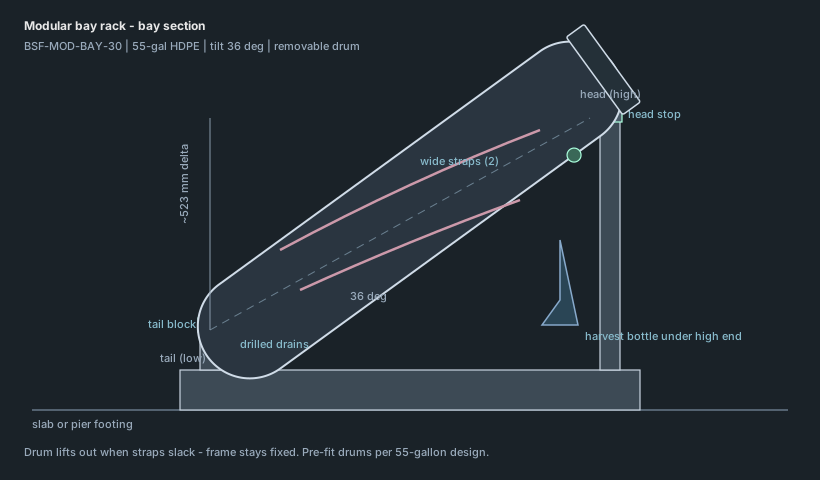
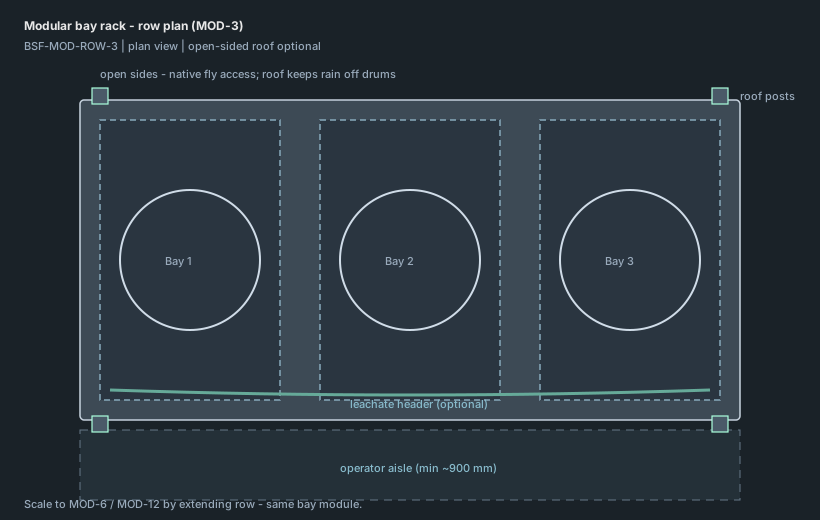
When operators empty pickup buckets into central drums instead of swapping whole modules, a horizontal row of removable 55-gallon poly drums may fit better. Same welded cradle idea, one tier, wider bays—see schematics below (bay section and row plan); vessel prep follows the 55-gallon tilted drum.
Schematics
Build from these drawings—not from marketing photos. Scroll the set; each figure is the measuring source.
Materials
Gather these before you cut. Optional items use unit optional or qty 0 for notes.
| Qty | Unit | Item | Spec | Notes |
|---|---|---|---|---|
| 1 | each | Stack frame column 3-tier | Welded 50x50 mm posts + tier shelves + 36 deg open cradles | BSF-MOD-STACK-5G-3 |
| 6 | each | Cradle flat-bar rings per column | Upper+lower formed flat bar per tier (3 tiers x 2); bend on bucket form | Aluminum or mild steel stock bar; cheapest durable open cradle |
| 1 | lot | EPDM edge trim per column | Push-on EPDM (U-channel) on cradle contact edges; no glue | ~0.75–1.20 USD/ft sketch; UV/damp resistant |
| 3 | optional | Downhill rubber bumper per tier | Bolt-on stop if modules creep under vibration | Drill frame; stronger than adhesive neoprene |
| 3 | each | Rack module per column | Adapted bucket: rack bucket kit + lid kit | See /designs/5-gallon-rack/ and /designs/5-gallon-lid/ — not collection pails |
| 0 | each | Collection bucket per route | Standard food-grade 5-gal pail no holes | Separate inventory from rack modules |
| 1 | each | Rack module spare pool | N+1 adapted buckets per active column | Cheap to replace and re-adapt |
| 3 | each | Drain jumper per tier | Food-grade tubing to PVC tee | Quick-disconnect optional at tier swap |
| 1 | each | PVC downcomer per column | 32-40 mm PVC vertical with tees | Solvent weld; strap to frame post |
| 1 | each | Bank leachate header per row | 40 mm PVC sloped to sump | Min 1% grade |
| 1 | each | Sump | 20-60 L sealed or open with vent | Route to treatment - not crop tea without testing |
| 4 | each | Foot anchors per column | M10 expansion bolts | Bolt posts to slab |
| 1 | each | Roof post tab set | Bolt-on tabs for open-sided roof | Not a sealed building |
| 1 | each | Harvest bottle service per tier | 1-2 L PET on 28-400 adapter | Reach test for top tier |
| 0 | each | 55-gal bay row variant | See bay-section.svg + designs/55-gallon/ | Optional high-throughput alternate SKU |
| 0 | note | Cradle bend form | Fill spare 5-gal with cement; bend bar around outside of filled vessel | Slightly oversized OK; cardboard wrap for clearance; plastic may crack—mass matters |
| 0 | note | Avoid expanded-mesh cradle as default | Sags under wet load; traps grime | OK only if framed and lined; rings preferred |
| 0 | note | Avoid adhesive neoprene liner as default | Outdoor moisture kills adhesive | Use push-on EPDM instead |
Optional spreadsheet download: materials.csv
Build guide
Cradle, PVC, and commission steps: build guide. Module shells: rack bucket + lid kit.
Photos (looks like this)
Illustrative only — never for measuring. No published photos for this design yet.
Build sequence (summary)
- Fabricate stack frame; verify 36° per cradle and tier clearance.
- Batch-adapt rack modules: rack bucket + lid kit.
- Install PVC downcomers, header, and sump; water-test.
- Seat rack modules tier by tier (bottom up); connect jumpers and bottles.
- Commission biology; train operator: dump collection buckets into modules on daily route.
Rack module swap
When a rack module needs deep clean or replacement: stop feed → harvest prepupae → disconnect drain jumper and bottle → lift adapted bucket out → seat spare prepped module → reconnect. Collection buckets from the route are emptied into the feed opening, then returned with clean empties—not mounted on the frame. One person per rack module; no hoist at hub scale.
License: CERN-OHL-P-2.0 · Design IDs BSF-MOD-STACK-5G-3, BSF-MOD-BANK-5G-4