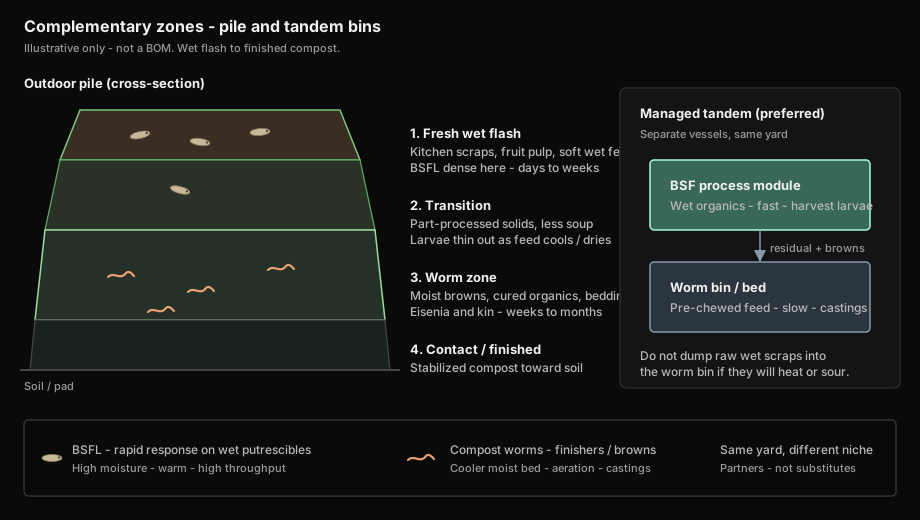
Partners, not substitutes
People sometimes ask whether black soldier fly larvae (BSFL) “replace” worm bins. They do not. Worms (typically red wigglers / Eisenia and related compost species) and BSFL specialize on different stages of the same organic stream. A yard that runs both usually converts more waste, with less odor and less house-fly pressure, than either system alone—see also BSF vs house flies for the aerobic wet-flash story.
Different foods
| Feed | BSFL | Compost worms |
|---|---|---|
| Fresh wet kitchen scraps | Preferred — fruit pulp, veg trim, soft leftovers | Only in small, well-buried amounts; large dumps heat, sour, or kill worms |
| Meat, animal remains, manure | Excellent — larvae often thrive; keep aerobic and drained | Generally avoid raw meat/manure dumps; stress or kill beds |
| Spent coffee / wet café organics | Useful in blend (not sole diet)—see waste stream | Better after cooling / mixing with browns; acidic dumps stress beds |
| Cardboard, leaves, shredded paper | Structure / seed pack carbon—not primary larval calories | Core bedding and browns—worms live here |
| Part-processed / pre-chewed solids | What’s left after larval harvest (plus frass-rich residue) | Excellent worm feed once moisture and heat are calm |
| Finished / near-finished compost | Not a larval target | Habitat and harvest zone (castings) |
Rule of thumb: give BSFL the wet, smelly, high-energy fraction; give worms the moist, structured, already calming fraction. Dumping a week of raw scraps straight onto a worm bed is how operators “prove” worms and BSF compete. They were never meant to share that meal.
Different speeds
- BSFL — days to a few weeks for a matched load of wet organics. Throughput is the point: volume and odor drop fast; larvae and frass / leachate leave as distinct streams.
- Worms — weeks to months to finish material into castings. Speed is not the product; stability, crumb structure, and a living soil amendment are.
In planning language: BSFL are the rapid-response digester; worms are the finisher / soil factory. Sequencing them (wet flash → residual to worms) matches how outdoor piles already stratify when left alone.
Outdoor pile: different places and layers
In an unmanaged or loosely managed outdoor compost pile, both guilds can be present at once—just not in the same pocket:
- Top / fresh wet flash — new scraps, high moisture, warmth from microbial heat. This is BSFL territory when soldier flies colonize the pile. Larvae churn and thin the “soup.”
- Transition band — part-processed solids, less free liquid, fewer larvae. Material is cooler and more fibrous.
- Lower moist browns — leaf mold, cardboard, older organics. Compost worms prefer this cooler, aerated, sponge-damp zone. They avoid hot cores and anaerobic slurry.
- Base / soil contact — more finished compost and soil fauna. Harvest or leave in place as a pad.
Turning a pile mixes these strata. That can help aeration for compost, but it also redistributes heat and wet pockets—so wild BSFL and worm zones shift. Operators who want both guilds reliably usually stop fighting the pile and split the jobs into vessels (next section).
Managed tandem: BSF module + worm bin
The clearest backyard pattern:
- Route sorted wet organics into a 5-gal process module (or modular stack).
- Harvest larvae for feed where rules allow (BSFL as chicken feed).
- Send drained residual solids—mixed with browns—into a worm bin or worm bed.
- Use worm castings on gardens; cure or compost frass on its own schedule if you harvest solids from the BSF side separately.
Keep leachate out of the worm bin as free-standing puddles; worms drown in anaerobic sumps the same way larval beds fail when waterlogged. Drain first, then feed moist solids.
Why they complement each other
- Odor & pests — BSFL shrink the wet window that attracts house flies; worms polish what remains into something garden-safe smelling.
- Yield diversity — larvae (protein) + frass + worm castings beat “one compost pile, one product.”
- Risk split — a worm die-off from a hot dump does not kill your BSF colony; a paused BSF tank does not erase a mature worm bed.
- Carbon routing — cardboard and leaves that barely feed larvae become worm bedding and structure.
Common mistakes
- Expecting worms to eat the same wet café/kitchen load BSFL thrive on.
- Expecting BSFL to produce finished garden compost without a curing / worm / compost step.
- Mixing leachate puddles into worm bedding.
- Assuming presence of both in a wild pile means they compete for the same niche—they are stratified.
Operational framing on this page is field-practice synthesis (pile stratification + tandem vessels). Related research trail: Aerobic vs anaerobic house-fly context · Larval moisture target · Leachate separate from solids.