Operators often ask “what can I feed the larvae?” before asking “what happens to everything else on the plate?” In practice, the best setups sort waste at the source, route each fraction to the right destination, and treat the BSF tank as the processor for what is left—not the first or only bin in the kitchen.
This article covers source-sorting workflows—from kitchen bins through an optional chicken-yard cascade—and how the same logic scales to a restaurant pickup service. Chiriquí / Boquete field notes appear as named examples, not as a universal template. Tank hardware is covered elsewhere (tank design, 5-gallon, 55-gallon); economy roles are in the economy article.
One stream, many exits
Think of waste leaving the kitchen in layers. Recyclables and dry paper never meet the larval bed. Edible scraps go to animals when safe and appropriate. Wet organics that animals should not get—or that you cannot store safely for them—go to the BSF collection bin. The tank operator receives those bins, not the whole household trash bag.
| Fraction | Typical route | Why not the BSF bin? |
|---|---|---|
| Plastic, glass, metal, plastic-coated items | Recycling or landfill per local rules | Contamination; larvae do not eat packaging |
| Clean paper and dry carbon (leaves, straw) | Recycling, compost pile, or yard bedding (farm scale) | Low nutrient for larvae; balances wet feed when layered in a deep bedding cascade |
| Selected scraps for animals | Chickens, goats, pigs, dogs, cats, and other livestock—per local practice | Direct use beats digestion when safe and practical |
| Remaining wet organics | BSF collection bin → tank | Protein and frass out; house-fly pressure down |
The exact split depends on what you raise and local rules. The point is intentional routing: BSF complement chickens and other partners—they do not replace thinking about each fraction.
Sort at the source
At a shared compound, each kitchen (or each meal cleanup station) keeps small labeled bins so sorting becomes habit—not a second job at the tank.
- Recyclables — plastic, glass, and anything with plastic coating or laminate goes out of the food stream immediately.
- Paper and carbon — plain paper, cardboard without paint or plastic film, dried leaves, and similar browns. At farm scale these often go to the chicken-yard bedding pile rather than off-site recycling. Torn plain cardboard also seeds new BSF buckets—see setup: seed a new bucket.
- Animal bucket — scraps you would feed directly (cooked rice, bread ends, specific trimmings). Know your species: chickens, pigs, and goats accept different things; cats and dogs have narrower safe lists.
- BSF bucket — soft, digestible wet organics approved for your tank. Whoever fills this bin needs feedstock judgment—see below. Not “everything that is not plastic.”
Safety note: This article is not veterinary or food-safety advice. Some foods are toxic to specific animals; some manures and processing waste need legal clearance before feeding anything. When in doubt, keep material out of both the animal bucket and the BSF bin until you have a clear rule.
What belongs in the BSF bin
Larvae want wet, organic, bite-sized feed—not packaging, not bulk dry paper, not a full bottle of oil. “Organic” is necessary but not sufficient: some kitchen scraps are actively bad for the bed and show up later in frass.
Generally good (compound-level examples from Chiriquí field notes):
- Soft fruit flesh and trim—mango and avocado flesh go down well
- Plate scrapings and leftover wet food that animals did not take
- Meat, butcher trim, and animal remains — larvae often thrive on these denser streams; a bit of meat is also one of the strongest lures when trapping wild adults. Keep moisture and drainage in range and expect stronger odor if loads sit before dumping
- Bones (including large ones left protruding) — not much larval food, but adults love dry edges and bone surfaces sticking out of the bed as egg-laying sites; leave a few proud of the substrate when seeding or trapping
- Many manures — legitimate BSF feed when the bed stays aerobic; ammonia spikes and moisture need attention (see tier B in economy roles)
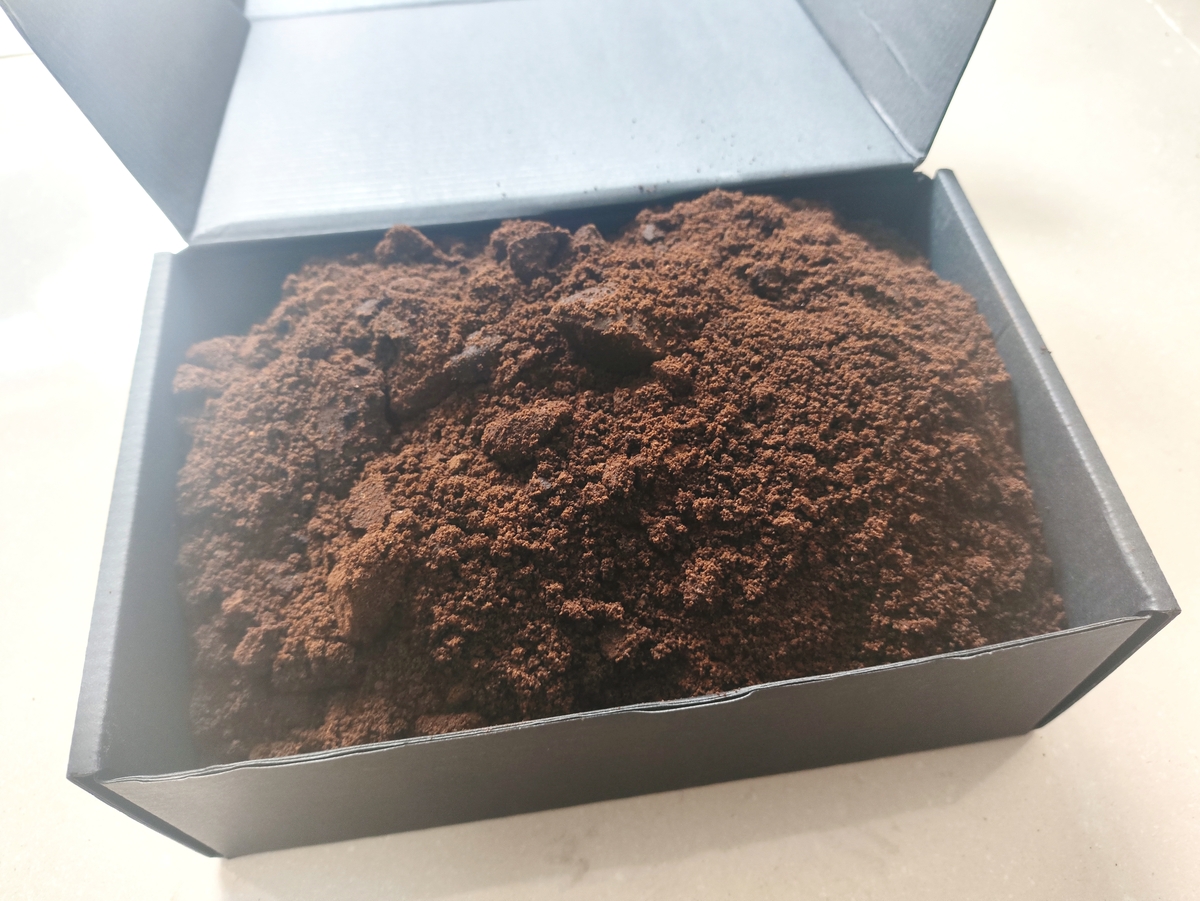
- Spent coffee grounds and similar steady tier-A streams (blend ingredient, not sole diet—see economy roles)
- Small amounts of starch or grain waste when mixed with other feed
Biology capability is not the same as feed-law clearance: local rules may restrict selling or feeding larvae/frass raised on manure or animal by-products. That is a product-use question, not a reason to pretend larvae cannot eat those streams.
Often bad or needs preprocessing—sort out before the bucket, or route elsewhere:
- Fibrous peels and husks — tough rinds and shells linger in the bed. Tropical field reports flag passion fruit (maracuyá) husks in particular—they break down slowly and clog the substrate.
- Stone fruit and avocado pits — larvae eat the flesh around them, but pits pile up, survive harvest, and end up in frass. Compost them separately or remove by hand.
- Citrus peels — treat as a no-go for the BSF stream; oils and texture make them a poor default feed.
- Plastic, glass, metal, rubber gloves, chemical cleaners — never.
- Very dry material and heavy oil/fryer waste unless you have a deliberate preprocessing plan.
- Mixed unknowns, chemical history, and human-waste-derived streams — do not dump straight into a kitchen tank; see heat preprocessing for a homestead design direction (not yet implemented here).
The person separating the BSF food stream has to be knowledgeable—not every household member on day one, but at least one designated sorter who knows the exclusions. That is different from downstream pickup roles where the rule can stay dead simple.
Who needs to know what
Sorting responsibility splits by how predictable the stream is:
| Role | Typical site | Knowledge level |
|---|---|---|
| BSF food sorter | Family compound kitchen | Knows fibrous husks, citrus, pits, and animal-vs-tank calls |
| End operator | Café prep line | One rule: “spent coffee in this bucket”—tier-A stream, minimal judgment |
| Tank operator | Central drum or hub | Spot-checks loads, rejects contamination, adjusts feeding |
Restaurant programs work best when the stream is designed so front-line staff do not need fibrous-husk feedstock judgment—coffee grounds only, or a short approved list posted on the bucket. Mixed kitchen buckets from a full-service restaurant need a trained prep cook or a receiving QA step at the hub. Feedstock quality is where supplier–operator programs succeed or fail; bucket size is the easy part.
Heat preprocessing (design intent)
Status: not yet implemented at Boquete. Larvae already thrive on meat, animal remains, and many manures when the bed is managed well—this section is not “don’t feed those.” It is a homestead concept for streams where you want extra pathogen or regulatory confidence before products enter an animal-feed or soil pathway: mixed/unknown loads, human-waste-derived material, and other cases sorting alone will not clear. Documented as design direction, not a validated SOP. Feedstock tiers: economy article.
The idea: collect material in metal collector buckets, load them into a solar oven, and monitor with a thermometer until documented time and temperature targets are met and logged. Only then—with written records and awareness of local rules—route the output to a BSF tank and the broader feed chain (larvae, chickens, compost cascade) when you need that paper trail.
One concept path is a solar heat gate for high-risk or regulated streams—including an off-grid toilet where waste lands in a metal bucket instead of a wet pit, cycles through the oven, and becomes a candidate feedstock rather than a permanent contamination hazard on site. The same thermal lane can cover mixed buckets when kitchen sorting is unreliable, or manure/meat loads when your intended use (selling larvae as feed, for example) requires a documented kill step—not because BSF cannot digest them raw.
Why heat first, BSF second (when you choose that lane):
- Skip heat when the stream is already fine — tier-A coffee, clean kitchen trim, and intentional meat/manure diets for on-site non-sale use often go straight to the tank.
- Thermal gate for unknowns and human-waste paths — solar gives an off-grid path where grid pasteurizers are absent; the thermometer is your record, not guesswork.
- BSF as converter, not sterilizer — larvae reduce volume, odor, and house-fly pressure, but they are not a substitute for a heat treatment you have verified when rules or risk demand one. Frass and larvae still inherit what you put in.
- Confidence ladder — expand product claims only with streams and temperature logs that can be defended under local rules.
Hard limits: Pathogen kill depends on uniform heat, hold time, moisture, and load size—solar ovens vary by day and batch. Human-waste reuse, manure in commercial feed, and insect protein for animals are heavily regulated in many jurisdictions. This section is not sanitation engineering, legal, or veterinary advice. When in doubt about a regulated product use, keep material out of the marketed feed chain until you have a traceable process—or stick to tier-A streams where the barista rule is enough.
Operator rhythm (home or compound)
The tank operator role is a short daily loop, not a full-time job at household scale. At the Boquete family compound, one person typically:
- Collects the BSF bins from kitchens once or twice a day—before they sit open and attract house flies.
- Dumps contents into the active tank (often a 55-gallon drum on the compound; learning units may stay on a 5-gallon bucket).
- Checks larvae—activity, moisture, smell, pest intrusion.
- Stirs lightly with a stick or paddle if the surface has crusted or wet pockets; see operator access notes.
- Returns empty bins to the kitchens—sometimes with a quick rinse so the next day’s collection stays clean.
That rhythm keeps the tank aerobic and the kitchens tidy. Harvesting prepupae and managing frass / leachate sit on a weekly or batch cadence layered on top of this loop.
Chicken yard integration (farm scale)
At farm scale, waste streams often converge in a chicken yard—not only in kitchen bins. The Boquete pilot uses this pattern once land, a flock, and steady paper/garden carbon are available; operators elsewhere can apply the same cascade without matching that compound.
The active BSF tank sits inside the chicken yard. Prepupae that miss the harvest ramp or larvae that wander out become live protein for the birds—an informal bonus harvest, not a substitute for balanced poultry feed. Chickens also patrol for house flies and other pests around the tank, which helps keep the yard aerobic. For trial rates, egg-quality evidence, and the Salmonella Gallinarum challenge study, see BSFL as chicken feed.
The yard itself is managed like a deep bedding compost cascade:
- Top layer — fresh wet inputs (BSF-bound kitchen scraps, direct chicken treats) mixed with dry carbon: shredded paper, cardboard, dried leaves, and other browns brought in from the paper/carbon stream.
- Middle layers — material breaks down as new bedding is added on top; heat, moisture, and scratching move older layers downward instead of turning a single static pile.
- Lower layers — partially stabilized compost you can harvest periodically for gardens, or leave in place to build soil under the run.
- Volunteer growth — seeds in kitchen and garden waste (squash, melon, grain sprouts) sometimes germinate further down the cascade where moisture and filtered light allow—unexpected greens for the flock or for transplanting.
Paper and leaves are not “waste” here—they are structure and sponge for the wet organics heading to the BSF tank and the scraps going straight to chickens. Without enough carbon, the yard goes anaerobic and smells; with the cascade, the same fractions that would be separate bins at the kitchen door become layers in one living floor.
Site placement matters: shade for the tank, drainage so leachate does not pool under bedding, and a harvest path the operator can still reach daily. See tank design for drainage and pest notes; finished frass from the tank can feed the cascade or go straight to beds.
Restaurant pickup service
The same operator pattern scales horizontally as a service: you are still collecting sorted organics and running tanks—you add routes, buckets, and customer training.
A café or restaurant can run a simplified sort at the prep line—often much simpler than a household compound:
- Recyclables and trash follow municipal rules on site.
- Tier-A bucket — e.g. spent coffee grounds only. The barista’s job is one line: “grounds in this bucket, not the trash.” No citrus, pit, or husk decisions required.
- Mixed organics bucket (optional, full kitchen) — only if prep staff are trained on exclusions; otherwise reject or preprocess at the hub.
- Wet organics go into transportable 5-gallon buckets (food-grade, lidded); staff keep plastic wrap and gloves out.
Order-of-magnitude volumes (replace with weigh-ins): a café’s spent grounds alone often land near ~8–10 kg/day wet (claim); a full-service restaurant’s food waste commonly ~15–20 kg/day (claim); a household’s total food waste is ~0.22 kg/person/day globally, so a sorted BSF stream of ~0.5 kg/household/day is a planning band for a small family (claim). Size tanks from those rates × participation—not from “one bucket equals one café.”
The operator visits daily (or on a fixed schedule): picks up full buckets, leaves clean empty ones, dumps at a central tank or hub, and repeats the inspect-and-stir routine. The restaurant gets reduced waste-hauling volume and a visible sustainability story; the operator gets feedstock volume and can share value from larvae or frass where allowed.
At a modular stack hub, collection buckets stay intact (no drill holes)—standard cheap 5-gallon pails on the route. Rack modules on the frame are separately adapted buckets (drains, harvest port, access lid). The operator dumps collection pails into rack modules; damaged buckets on either side are cheap to replace and easy to re-adapt at the hub.
Economics and liability for commercial pickup are still being documented in the community layer—contracts, spill cleanup, and feedstock quality are the hard parts, not bucket size. See organic waste supplier and tank operator in the economy article.
Why this fits a holistic system
BSF work best when nested inside a living place: chickens take some scraps and stray larvae, paper and leaves become bedding carbon, recyclables stay clean, and the tank handles what would otherwise rot and draw house flies. At farm scale the chicken yard is the hub where those routes meet—a deep bedding cascade rather than four disconnected piles.
Start with one BSF bucket and one kitchen. Add animal routes and a carbon bin as the sort becomes automatic. Move the tank into the yard when harvest and bedding rhythm feel natural. Consider heat preprocessing only after the simple streams are boring—and treat it as a separate experiment with its own logs. Add restaurant routes only when the compound loop is reliable. Municipal-scale programs work best business-first (cafés → coffee industry → restaurants → population), with complementary services unlocking as volume grows—see municipal rollout.
Field notes: Boquete BSF Project family-compound workflow (2026). Heat preprocessing: homestead design intent, not field-tested. Research trail: Aerobic vs anaerobic house-fly breeding, Spent coffee as blend ingredient.